

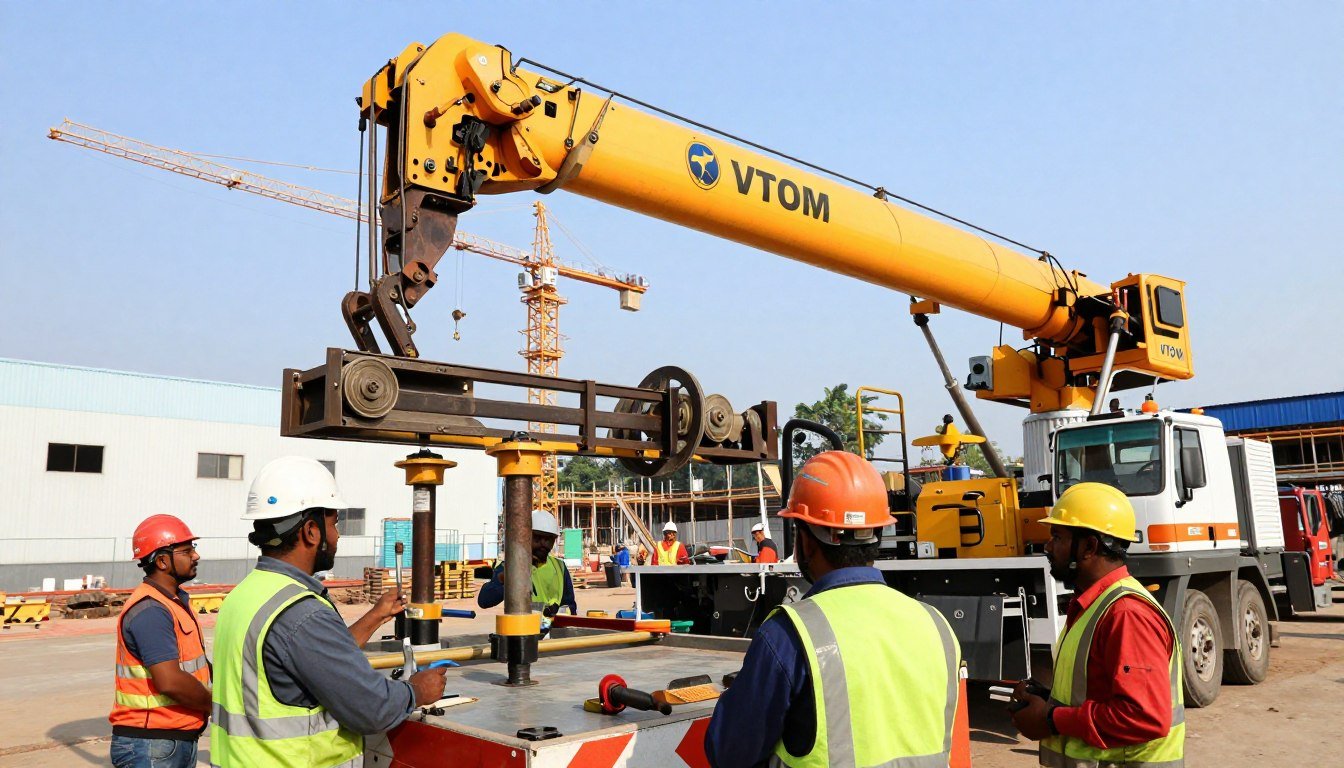
The Jib Crane Installation Process in India requires careful planning, technical expertise, and strict adherence to industry safety standards. Proper installation ensures reliable lifting performance, minimizes equipment downtime, and extends the operational life of the crane.
Following a structured installation process helps optimize material handling operations while reducing the risk of mechanical failures and workplace accidents. From site preparation and foundation work to crane assembly, alignment, load testing, and final commissioning, every stage plays a vital role in achieving safe and efficient performance.
This comprehensive guide provides practical insights into the Jib Crane Installation Process in India, helping plant managers, engineers, and maintenance professionals implement best practices for a secure, compliant, and high-performing lifting system
Key Takeaways
- Prioritize structural integrity during the initial setup phase.
- Follow manufacturer specifications to ensure equipment longevity.
- Conduct thorough load testing before starting daily operations.
- Maintain clear communication with your engineering team throughout the project.
- Regular inspections help identify potential hazards early.
Pre-Installation Planning and Site Preparation
Planning is key to a successful best jib crane installation. By checking your workspace first, you make sure it’s safe and works well. This step is crucial for both safety and efficiency.
Assessing Facility Load-Bearing Capacity
First, check if your floor or wall can hold the crane’s weight. Structural integrity is essential. The crane must support its own weight and the loads it will lift.
Get a structural engineer’s opinion to see if your floor is up to the task. Skipping this check can cause equipment failure or damage to your building.
Selecting the Right Crane Type for Your Workspace
Choosing the right crane depends on your space and lifting needs. A pillar-mounted crane is good for open areas where you need full rotation.
For tight spaces, a wall-mounted crane is often the best jib crane installation. It saves space and keeps the area clear.
Procuring Necessary Permits and Approvals
Understanding local rules is important. Make sure your project meets Indian building codes and safety standards for lifting machines.
Getting the right permits early avoids delays. Professional documentation and following safety rules protect your business. They also ensure a safe work environment.
Site Assessment and Foundation Requirements
Starting a jib crane project needs a careful check of your foundation and floor. The crane’s stability relies on a solid base. Without a strong base, even top-notch cranes can face problems or fail.
Evaluating Floor Integrity and Concrete Specifications
First, check if your concrete slab meets the crane maker’s standards. Industrial jib cranes need strong, reinforced concrete floors. Engineers must inspect the slab’s thickness and PSI rating to match the crane’s load capacity.
If your floor is not up to par, you might need a new foundation or sub-base. This keeps the crane stable during heavy lifts. Skipping these steps can cause concrete cracks or unsafe vibrations.
Determining Optimal Placement for Maximum Coverage
Choosing the right spot for your crane is key. You need to check the jib arm’s swing radius to fit your work area. Also, map out the lifting height to avoid hitting overhead stuff like electrical wires or ducts.
Think about these points when picking a spot:
- Be close to your main work area to save time.
- Stay away from busy paths to avoid accidents.
- Make sure maintenance teams can easily get to it.
Preparing the Mounting Surface for Stability
After picking a spot, make sure the floor is perfectly level. Uneven floors can make the mast lean, stressing the crane. Leveling with precision is crucial for safety and smooth operation.
The team should use top-notch anchor bolts and follow the manufacturer’s anchoring methods. Wait for the concrete to cure properly before mounting the crane. These steps help your jib crane be a reliable tool for your business for many years.
Jib Crane Installation Process in India
Installing a jib crane in India needs careful planning and expert help. Working with skilled teams ensures all parts meet safety standards. This way, your equipment works well for a long time without downtime.
Coordinating with Professional Installation Services
It’s key to work with experts for a smooth installation. A good jib crane installation company has the right skills for tricky setups. They make sure everything follows the maker’s rules and local laws.
Professional oversight helps avoid problems that could make the crane unstable or break. These pros handle everything from checking the site to making sure it works right from the start. They keep your investment safe and running well.
Logistics and Equipment Handling on Site
Managing the move of heavy parts is crucial. They must be moved carefully to avoid damage before being put together. This way, all parts are ready to be used without any issues.
Choosing a team for professional installation in India means you get their special gear and ways to move things. They carefully place the crane parts to avoid harming the floor. Strategic staging makes the setup faster and more efficient.
Managing On-Site Safety Protocols During Assembly
Safety is the top concern when putting together lifting equipment. A pro team sets up clear areas for work to keep people safe while moving heavy things. This is important for protecting workers and keeping the area safe.
Everyone working must wear the right safety gear at all times. Rigorous safety protocols include checking the equipment and anchor points often. This approach helps avoid risks and keeps the work area safe for everyone.
Mechanical Assembly Steps
Getting a jib crane right in India means precision is key. This part needs careful detail to make sure the whole system is strong. By following the right steps, you make sure it works well under heavy loads.
Mounting the Mast or Wall Bracket
The crane’s base needs to be perfectly straight. A high-precision level is a must to avoid any issues later. A straight mast means the arm moves smoothly without any problems.
For wall-mounted cranes, check if the wall can handle the crane’s torque. Make sure all bolts are tightened right to keep it stable. This stops vibrations and wear over time.
Attaching the Jib Arm and Pivot Assembly
After the mast is set, attach the jib arm and pivot assembly. This step needs precise alignment for even weight distribution. Proper lubrication of the pivot points helps reduce friction and lasts longer.
Make sure the arm can swing freely without any blockages. If it’s hard to move, it’s not aligned right. Fixing this now prevents uneven wear.
Installing the Hoist and Trolley System
The last step is adding the hoist and trolley system to the jib arm. This part is crucial for lifting and safety. Ensure the trolley moves smoothly along the beam before connecting the electricity.
The hoist must be centered for balance during lifts. Check all safety pins and locks to keep the trolley in place. A well-set system is key for daily tasks.
| Component | Primary Function | Critical Requirement |
|---|---|---|
| Mast/Bracket | Structural Support | Perfect Verticality |
| Jib Arm | Load Movement | Smooth Rotation |
| Hoist/Trolley | Lifting/Traversing | Balanced Alignment |
Electrical Integration and Wiring
Setting up a jib crane needs careful attention to electrical standards. After the mechanical parts are put together, the electrical system makes it all work. Experts must check every connection to follow safety codes for lasting performance.
Connecting Power Supply and Control Panels
The power supply goes through a special circuit breaker to avoid overloads. Technicians must check that the voltage fits the hoist motor and control unit. Secure terminal connections are key to avoid sparks and fires during heavy use.
Implementing Emergency Stop and Limit Switches
Safety is the top concern in setting up a jib crane. Each unit needs a clear emergency stop button to stop power fast in emergencies. Also, limit switches must be set to stop the hoist before it goes too far.
Ensuring Proper Grounding and Cable Management
Good grounding is crucial to keep workers safe from shocks and protect control electronics. All cables should be in safe places to avoid getting tangled. Organized cable management helps prevent damage from the environment in industrial areas.
| Component | Primary Function | Maintenance Frequency |
|---|---|---|
| Limit Switches | Prevent over-travel | Monthly |
| Control Panel | System command | Quarterly |
| Grounding Wire | Safety discharge | Bi-annually |
| Festoon Cables | Power delivery | Monthly |
Safety Testing and Load Verification
Checking your new jib crane’s safety is key before it starts work. After putting together the mechanical and electrical parts, it needs jib crane safety testing. This makes sure it’s ready for the demands of Indian factories.
Conducting Static Load Testing
Static load testing checks the crane’s stability when it’s not moving. Technicians add a weight that’s more than the crane’s limit to test its strength. This load verification helps find any weak spots before it’s used.
Performing Dynamic Load Testing Procedures
Dynamic testing sees how the crane acts when it’s moving. The crane lifts the rated load through all its movements. This makes sure the crane’s motor and drive work well without problems.
- Verify that the hoist operates smoothly at various speeds.
- Check for any unusual noises or mechanical resistance during rotation.
- Confirm that all limit switches trigger correctly during travel.
Verifying Operational Smoothness and Braking Efficiency
The last test is about the crane’s braking and control. A good brake is crucial for stopping loads quickly. Technicians test the brakes by stopping the crane at full speed to see if they work right.
Smooth operation is also key to avoid load swinging. By checking these things, you ensure your place is safe and your equipment lasts longer.
Regulatory Compliance and Documentation
Setting up a crane is just the start. Keeping to safety rules is key for long-term safety. Keeping records shows you care about safety and follow the law.
Adhering to Indian Standards for Lifting Equipment
In India, all lifting gear must meet Bureau of Indian Standards (BIS) rules. These rules check if your equipment is safe and strong enough for work. Following these rules keeps your workers safe and avoids legal trouble.
It’s important to check your equipment often to make sure it’s safe. Following national standards makes your workplace better and more reliable. This is crucial for any business with heavy machinery.
Maintaining Maintenance Logs and Inspection Records
Keeping up with maintenance logs is key to knowing your crane’s health. By recording every service and repair, you learn a lot about your equipment. Regular care can make your crane last 20–30 years, saving you money in the long run.
Inspection records should list dates, notes from the technician, and any parts changed. This helps you fix small problems before they get big. Keeping good records is the best way to keep your crane in top shape for years.
Training Personnel for Safe Crane Operation
Even the best crane needs a skilled person to use it safely. Training programs teach how to handle loads and deal with emergencies. Good training lowers accident risk and stops damage to the crane.
Training should be updated often to keep safety first. A well-trained team is your best defense against accidents. It’s as important to invest in your people as it is in the crane itself.
| Activity Type | Frequency | Primary Goal |
|---|---|---|
| Visual Inspection | Daily | Identify immediate hazards |
| Lubrication Check | Monthly | Reduce mechanical wear |
| Load Testing | Annually | Verify structural integrity |
| Operator Training | Bi-Annually | Ensure safe handling |
Conclusion
A successful project starts with the right setup for your material handling equipment. Working with a professional jib crane installation company is key. It ensures your facility is safe and efficient.
This guide is your roadmap to success. It shows how to set up your jib crane with care. This protects your team and equipment from harm.
Choosing the best jib crane installation means focusing on quality and precision. Top-notch services ensure every detail meets strict standards. This gives you peace of mind.
The field of jib crane installation in India is changing fast. New safety rules and advanced tech are coming. Companies that invest in experts now will have a stronger future.
About Us
About OM Cranes – Trusted Jib Crane Installation Experts in India
At OM Cranes, we specialize in providing reliable jib crane installation services in India with advanced engineering solutions for industrial lifting requirements. Our experienced team delivers complete support from site inspection, crane installation, alignment, testing, and after-sales assistance to ensure safe and efficient material handling operations.
We provide customized jib crane solutions designed for manufacturing plants, warehouses, workshops, automotive industries, and heavy engineering units. With a strong focus on quality, safety standards, and long-term performance, OM Cranes helps industries improve productivity through durable and efficient lifting systems.
We offer jib crane installation and crane services across Pune, Chikhali, Pimpri Chinchwad, Bhosari MIDC, Chakan MIDC, Talegaon, Ranjangaon MIDC, Hinjewadi, Moshi, and nearby industrial areas.
Faqs
1. What is the process of jib crane installation?
The jib crane installation process includes site inspection, foundation preparation, crane structure assembly, hoist installation, electrical connection, safety testing, and final commissioning to ensure smooth and reliable lifting performance.
2. How long does jib crane installation take?
Jib crane installation time depends on crane type, capacity, site condition, and foundation requirements. Most standard installations can be completed within a few days after proper site preparation and component availability.
3. Which industries require jib crane installation services?
Jib cranes are commonly used in manufacturing units, warehouses, fabrication workshops, automotive plants, assembly lines, and engineering industries for safe material lifting and handling operations.
4. Do you provide customized jib crane installation solutions?
Yes, OM Cranes provides customized jib crane solutions based on lifting capacity, working area, height requirements, rotation needs, and industry-specific material handling applications.
5. Where can I find jib crane installation services near Pune?
OM Cranes provides jib crane installation services across Pune and nearby industrial locations including Chikhali, Bhosari MIDC, Chakan MIDC, Pimpri Chinchwad, Talegaon MIDC, Moshi, Hinjewadi, and Ranjangaon MIDC.
 Previous Post
 Next Post