

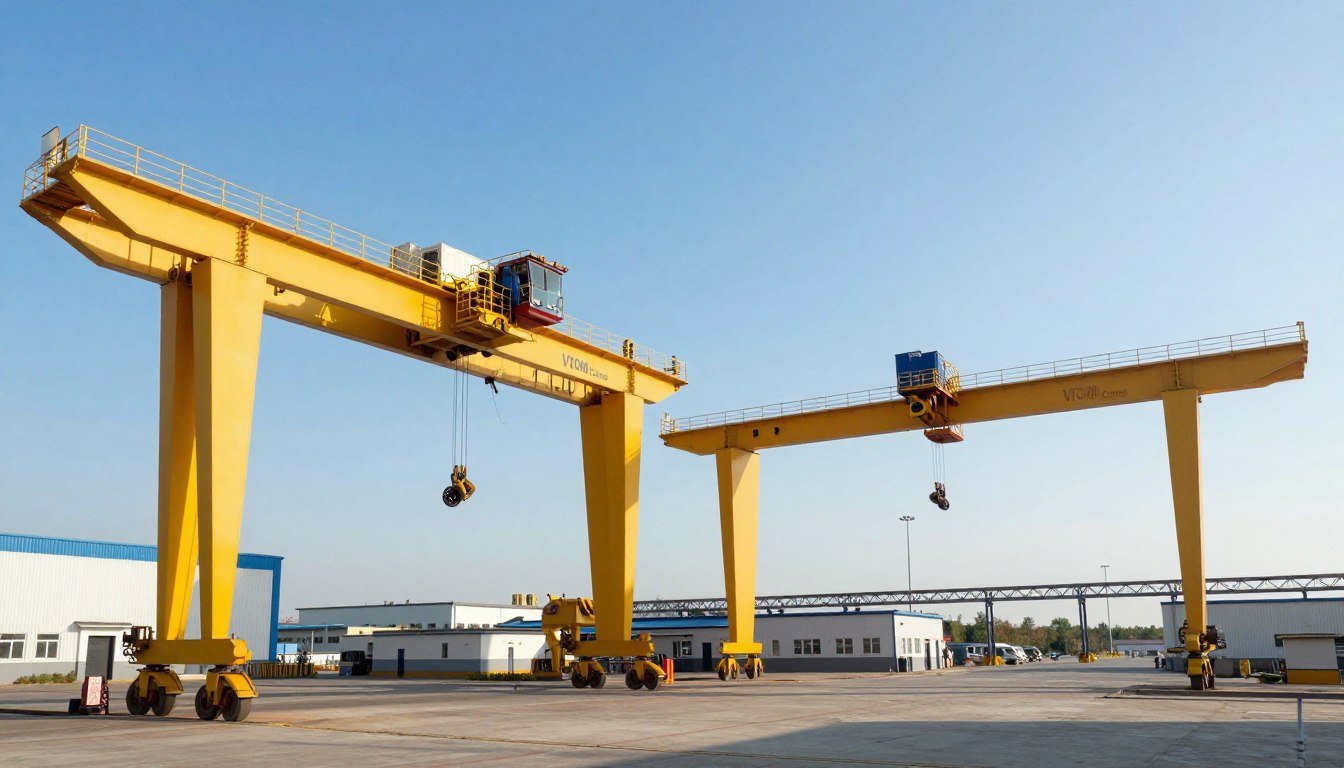
Choosing the right lifting equipment is key for any facility manager in India. Whether it’s for a warehouse or a heavy manufacturing plant, knowing the gantry crane vs eot crane debate is crucial. It’s all about success in your operations.
At VTOM, we know every industrial setting is different. Based in Pune, we offer expert advice. We help you understand the technical and financial sides of your material handling needs.
This guide gives you a detailed look at the differences between gantry crane and eot crane systems. We focus on their design and how they perform over time. Our goal is to help you choose wisely, improving your facility’s efficiency. Rely on our knowledge to make your heavy lifting safer and more precise.
Understanding the Fundamentals of Industrial Lifting Systems
Every factory in India must choose between ground-supported or overhead-mounted lifting solutions. The right choice depends on understanding how different systems handle heavy loads. The debate between gantry crane vs electric overhead traveling crane often focuses on cost. But, the structure of your facility is the most critical factor.
Defining the Gantry Crane Architecture
A gantry crane is a self-supporting structure that moves on ground-level rails. It doesn’t need the building’s roof or walls for stability. This makes it perfect for outdoor yards and large workshops where overhead space is limited.
Defining the Electric Overhead Traveling Crane
An Electric Overhead Traveling (EOT) crane, on the other hand, needs the building’s structure to work. It’s mounted on beams that run along the facility, allowing it to move across the workspace from above. Despite their differences, gantry crane and eot crane share similarities, like using electric hoists and motorized trolleys for lifting tasks.
| Feature | Gantry Crane | EOT Crane |
|---|---|---|
| Support System | Ground-level rails | Building runway beams |
| Installation | Independent structure | Integrated with building |
| Primary Use | Outdoor and flexible | Indoor and fixed |
| Space Usage | Floor space required | Optimizes vertical space |
Gantry Crane vs EOT Crane: Structural Design and Installation
When comparing gantry crane vs eot crane, the main difference is how they fit into your building. The design of a crane affects how easy it is to install and its impact on your space.
Choosing the right crane means checking your building’s strength. At VTOM, we focus on designs that fit well in many industrial settings across India.
Support Mechanisms and Runway Requirements
The differences between gantry crane and eot crane start with their support. EOT cranes need special beams in the ceiling or columns.
This setup means your building must handle the crane’s weight and movement. Gantry cranes, on the other hand, use ground-level tracks or rails.
Gantry systems don’t stress your building’s roof as much. They’re a flexible choice for places where changing the roof isn’t possible.
Space Utilization and Facility Integration
Looking at gantry crane vs electric overhead traveling crane, space is key. EOT cranes save floor space because they’re up high.
But, they need a lot of vertical space and specific building sizes. Gantry cranes use floor space but are great for outdoor or temporary indoor use.
VTOM tailors these designs to meet your needs. We look at the gantry crane eot crane difference to make sure your investment is worth it.
| Feature | EOT Crane | Gantry Crane |
|---|---|---|
| Support Type | Building Columns | Ground Rails |
| Installation | High Complexity | Moderate Complexity |
| Floor Space | Minimal Impact | Requires Track Path |
| Structural Load | High on Building | Low on Building |
Operational Capabilities and Load Handling
How well your cranes move is key to your factory’s success. When you look at a gantry crane compared to eot crane, you see they meet different needs. Picking the right one keeps your factory running smoothly and safely.
Lifting Capacity and Span Versatility
Both gantry and EOT cranes handle heavy loads well. But, they differ in how they handle different spans. Gantry cranes are better for wide outdoor areas where fixed paths are hard to set up.
EOT cranes are great for places with steady loads and paths. They lift vertically with high precision, perfect for assembly lines. Gantry cranes, on the other hand, adjust in height, fitting many project needs.
Mobility and Flexibility in Material Handling
Knowing the gantry crane eot crane difference helps use space better. EOT cranes are fixed, freeing up ground for other tasks. They’re a top pick for indoor work in India.
Gantry cranes are super mobile, moving on rails or wheels. This lets them reach spots without overhead beams. Below is a table showing the main differences between these two systems.
| Feature | EOT Crane | Gantry Crane |
|---|---|---|
| Primary Environment | Indoor Facilities | Outdoor/Versatile |
| Movement Path | Fixed Runway | Flexible/Mobile |
| Installation | Structural Integration | Independent Support |
| Load Precision | High Consistency | High Adaptability |
Environmental Suitability and Application Scenarios
Choosing the right lifting solution means knowing your site’s needs. When looking at a gantry crane compared to an EOT crane, think about your site’s weather. At VTOM, we use special materials and coatings to keep your gear working well, no matter where you are.
Indoor Industrial Applications for EOT Cranes
Electric Overhead Traveling (EOT) cranes are top picks for indoor factories and warehouses. They work best where space is tight and lifting is frequent. They’re safe from rain, humidity, and extreme temperatures, making them last longer with regular care.
Indoor places get these benefits from EOT systems:
- Space Optimization: They use the building’s columns, saving floor space.
- Precision Control: Perfect for precise tasks in car or electronics making.
- Consistent Performance: Keeps working well in steady temperatures.
Outdoor and Port-Based Applications for Gantry Cranes
For outdoor spots, like ports or big construction sites, gantry cranes are better. They’re made to handle tough weather. VTOM builds them with strong steel and coatings to fight off moisture and salt.
Outdoor areas need strong cranes to handle bad weather. Our gantry systems are built for unmatched stability in wind or uneven ground. The right coating helps protect against rust and wear, keeping your crane working for many years.
Maintenance Requirements and Long-Term Reliability
Both gantry and EOT cranes need regular maintenance to stay safe. Keeping them running well for a long time means sticking to a maintenance plan. Using advanced parts like Variable Frequency Drives (VFD) helps a lot. Fixing small problems early saves money in the long run.
Routine Inspection Protocols for Overhead Systems
EOT cranes need special checks on their beams and electrical parts. Technicians check if the rails are level and clean. Regular electrical checks are key to keep power flowing during heavy lifts.
When comparing eot crane vs gantry crane maintenance, EOT cranes focus more on beam strength. VTOM’s maintenance plans spot beam fatigue early. This keeps your place running smoothly and cuts down on unexpected stops.
Managing Wear and Tear in Gantry Structures
Gantry cranes need special care for their wheels and legs. Since they move on the ground, they face more dirt and uneven surfaces. Consistent cleaning and lubrication of the wheels is crucial to avoid early breakdowns.
The legs of a gantry crane must be checked for stress or rust, more so outdoors. When looking at gantry vs eot crane maintenance, gantries need more checks on their moving parts. Keeping the crane balanced prevents damage to the motors.
| Maintenance Focus | EOT Crane Priority | Gantry Crane Priority |
|---|---|---|
| Primary Inspection | Runway Beam Alignment | Wheel and Leg Integrity |
| Electrical Systems | Collector Maintenance | Cable Reel Protection |
| Environmental Impact | Indoor Dust Control | Outdoor Corrosion Prevention |
| Operational Goal | Maximize Uptime | Ensure Structural Stability |
Cost Analysis and Return on Investment
When looking at gantry crane and eot crane comparison, the total cost is key for Indian businesses. It’s not just about the price tag. You need to see how these systems affect your profits over time.
Initial Capital Expenditure for Infrastructure
An EOT crane costs more upfront because of the special runway needed. You have to pay for the steel columns and beams that fit into your building.
A gantry crane is cheaper to install since it uses floor rails or wheels. But, think about the floor space it takes up. That space could be used for other things.
Operational Costs and Energy Efficiency Considerations
When deciding between a gantry crane or eot crane, look at energy use and upkeep. EOT cranes use less power because of their drive tech.
How often you need to maintain them also matters. Here are some financial points to consider:
- Infrastructure Needs: EOT cranes need building changes, while gantry systems don’t.
- Energy Efficiency: New EOT drives can cut down on electricity costs.
- Maintenance Frequency: Gantry systems outdoors might wear out faster because of weather.
| Financial Metric | EOT Crane | Gantry Crane |
|---|---|---|
| Initial Setup Cost | High (Structural) | Moderate (Floor-based) |
| Space Utilization | Excellent (Overhead) | Moderate (Floor footprint) |
| Maintenance Needs | Routine/Predictable | Higher (if outdoor) |
The return on investment depends on your setup and goals. By weighing the initial cost against ongoing efficiency, you can pick the best option for your business.
Safety Standards and Regulatory Compliance in India
Choosing between a gantry crane or eot crane means following strict safety rules. In India, factories need to be very careful to avoid accidents. VTOM Cranes makes sure your people and buildings are safe.
Adhering to Indian Industrial Safety Regulations
Every lifting machine must meet the Bureau of Indian Standards (BIS) rules. These rules cover the machine’s strength and electrical parts. By following these, factories make sure their gear can handle local weather and work loads.
But there’s more. Global standards like FEM and CMAA also help. Using these standards means your equipment will perform well. This helps avoid machine failures during important lifts.
Operator Training and Risk Mitigation Strategies
Deciding between an eot crane vs gantry crane is just the start. The most important thing is the people using the machines. Good training helps them spot dangers early.
Today’s safety tech is key too. Things like overload protection and anti-collision systems are very important. They help keep things safe, even when it’s busy.
| Safety Feature | EOT Crane Compliance | Gantry Crane Compliance |
|---|---|---|
| IS Standards | Mandatory | Mandatory |
| Overload Protection | Standard Integration | Standard Integration |
| Anti-Collision | Highly Recommended | Essential for Outdoor |
| Operator Certification | Required | Required |
Conclusion
Choosing the right equipment is key to meeting your facility’s needs. A detailed comparison of gantry and EOT cranes helps match your setup with your future goals.
EOT cranes are great for fixed indoor areas because they’re very efficient. Gantry cranes, on the other hand, are perfect for outdoor tasks and heavy-duty logistics. Your choice affects your daily work and safety.
VTOM Cranes offers top-notch lifting systems designed for the Indian market. We aim for high performance and strict safety to keep your operations smooth. Our team knows the differences between gantry and EOT cranes to ensure you get the best.
Contact our experts today to talk about your material handling needs. We’re here to help you improve your workflow and facility performance.
About Us
OM Cranes (VTOM Cranes) is a leading manufacturer and supplier of industrial crane solutions in Pune, specializing in high-performance Gantry Cranes and EOT Cranes for diverse industries. With strong expertise in engineering, fabrication, and installation, the company delivers customized lifting solutions designed for safety, efficiency, and long-term reliability.
Backed by advanced technology and strict quality standards, OM Cranes provides end-to-end services including design consultation, manufacturing, installation, and after-sales support. Serving industries such as construction, manufacturing, logistics, and heavy engineering, the company focuses on delivering durable and cost-effective crane systems that enhance productivity and operational performance.
FAQs
1. What is the main difference between gantry crane and EOT crane?
The main difference is in structure and usage. EOT cranes are fixed overhead systems installed inside buildings, while gantry cranes are mobile and supported by legs, making them suitable for outdoor and flexible applications.
2. Which crane is better for industrial use?
EOT cranes are ideal for heavy-duty indoor operations with continuous usage, while gantry cranes are better for outdoor environments, construction sites, and applications requiring mobility.
3. Where are gantry cranes commonly used?
Gantry cranes are widely used in shipyards, construction sites, railway yards, and outdoor material handling areas where mobility and flexibility are required.
4. Are EOT cranes suitable for heavy lifting?
Yes, EOT cranes are designed for high-capacity lifting and are commonly used in manufacturing plants, steel industries, and warehouses for handling heavy materials efficiently.
5. Which is more cost-effective: gantry crane or EOT crane?
Gantry cranes are generally more cost-effective for temporary or outdoor use due to lower installation costs, while EOT cranes require higher initial investment but offer long-term efficiency for fixed industrial setups.
 Previous Post