

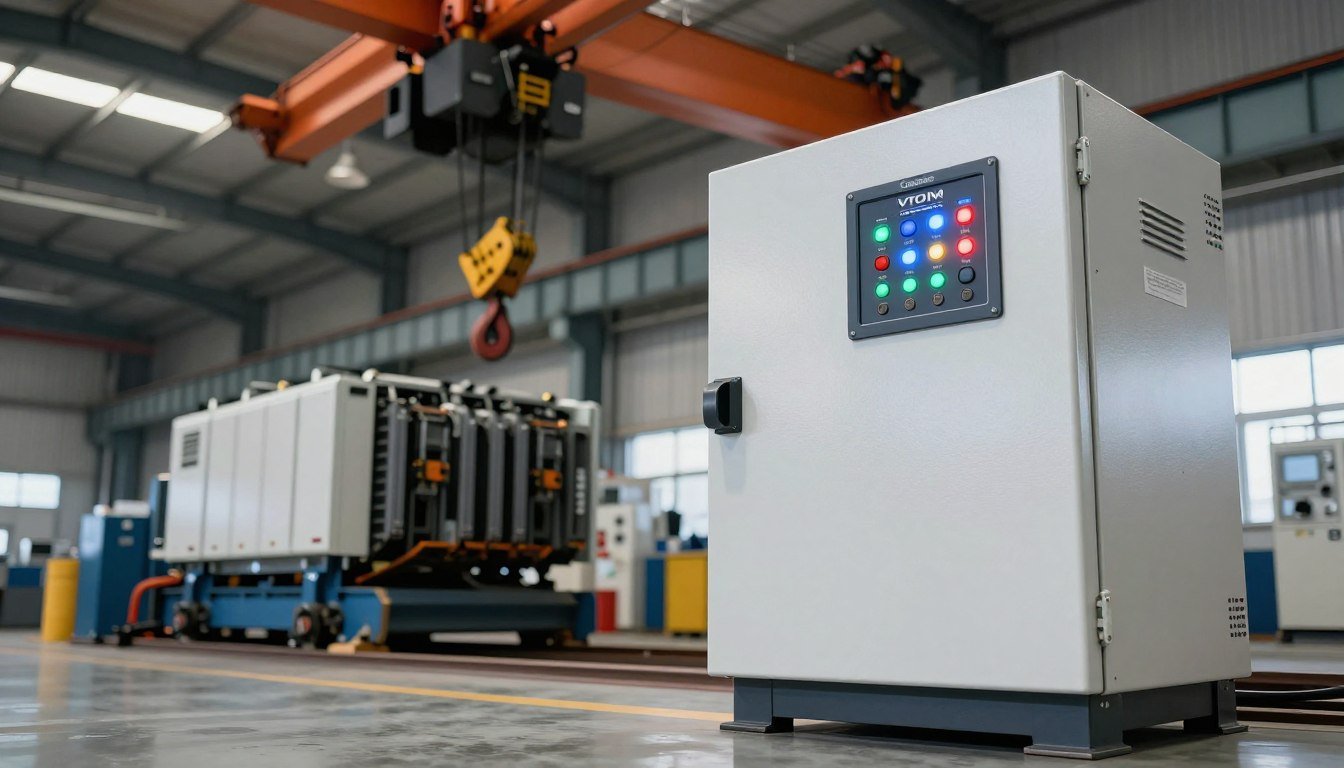
Factories across India depend on efficient material handling to keep production standards high. Adding a VFD for EOT crane system gives factory managers better control. It provides smooth starts and stops, reducing wear on heavy machinery.
These drives provide superior energy efficiency during lifting tasks by controlling power use. Precise motor speeds help prevent load swinging and create a safer workplace. This equipment improves lifting precision and supports reliable, long-term operation.
We examine movement control, hoist safety, and essential maintenance practices. Understanding these areas helps teams maximize their investment in demanding industrial settings. These practices also support steady performance in demanding industrial settings.
Key Takeaways
- Variable frequency drives provide precise speed control for heavy lifting tasks.
- Implementing this technology significantly reduces mechanical stress and maintenance costs.
- Energy consumption drops noticeably when motor speeds are managed effectively.
- Enhanced load stability leads to a safer and more productive factory floor.
- Proper installation and regular upkeep are vital for long-term equipment reliability.
Why VFD for EOT Crane Technology Matters
Understanding the core function of a VFD for EOT crane system helps Indian industrial facilities improve efficiency. These devices act as the crane’s brain, delivering power precisely when and where it is needed.
This technology manages electrical input to the motor and changes how heavy machinery works. It offers control that older, mechanical-heavy systems could not provide.
What a Variable Frequency Drive Does in Crane Operations
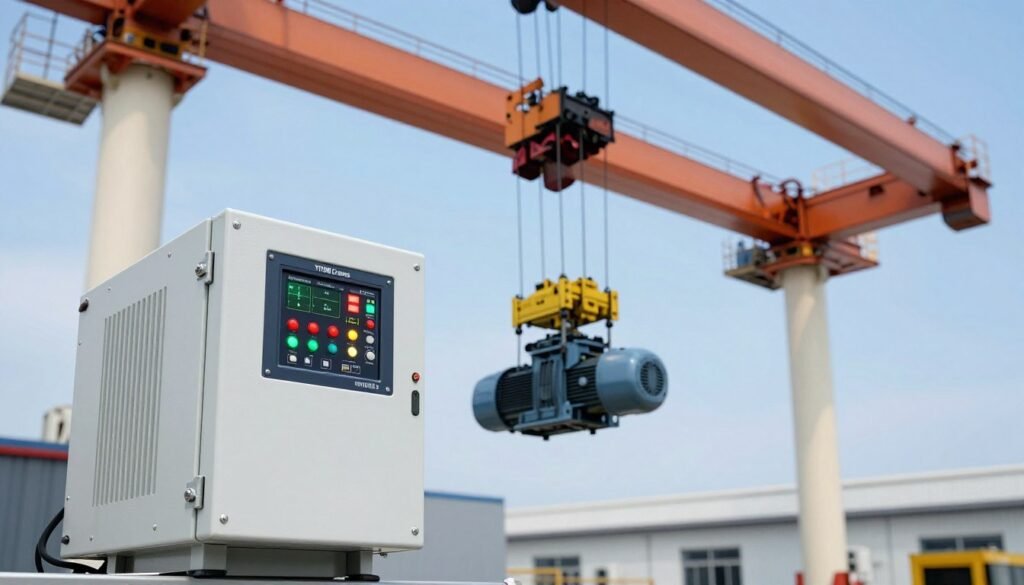
A variable frequency drive changes fixed-frequency AC power into output with variable frequency and voltage. This lets the drive adjust motor speed with high accuracy.
By changing these electrical settings, the eot crane vfd provides smooth acceleration and deceleration. This prevents jerky movements that can destabilize loads and cause mechanical fatigue.
Common EOT Crane Motors and Movement Functions Supported by VFDs
Cranes use several motor systems for complex material handling tasks. A high-quality drive supports these key functions:
- Hoisting: Managing the vertical lift to ensure stable load positioning.
- Long Travel: Controlling the movement of the entire crane along the runway beams.
- Cross Travel: Regulating the movement of the trolley across the bridge.
How VFD-Based Control Differs from Conventional Starting Methods
Traditional starting methods, such as Direct-On-Line (DOL) or star-delta starters, often cause massive power surges during startup. These spikes put immense stress on motor windings and the entire mechanical drivetrain.
In contrast, a VFD for EOT crane implementation provides a soft start and gradually increases motor speed. This modern approach reduces wear and tear. It helps your eot crane vfd setup stay reliable during heavy, continuous duty cycles common in India.
How a VFD for EOT Crane Improves Performance
Implementing a VFD for EOT crane system improves how factories manage heavy loads in Indian manufacturing facilities. These drives regulate electrical frequency supplied to motors, giving operators control that older systems cannot match. This change creates a more reliable, efficient workflow across the factory floor.
Smoother Starting, Stopping, and Direction Changes
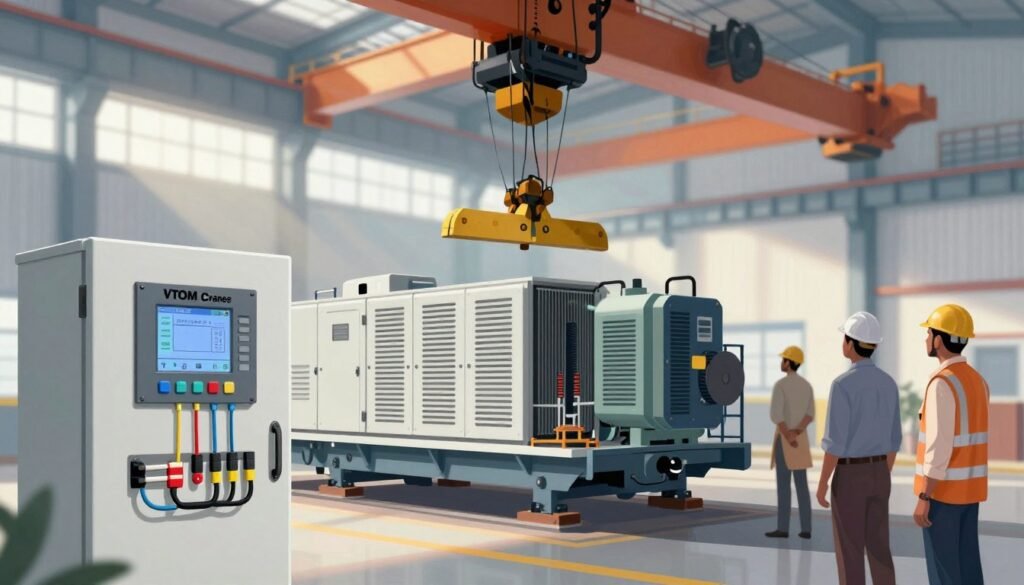
Traditional starting methods often cause sudden jerks that stress the entire crane structure. A vfd for crane motor setup prevents this with a soft start and gradual voltage and frequency increases. This allows loads to move without the violent swings caused by direct-on-line starting.
Precise EOT Crane Speed Control for Different Loads
Effective eot crane speed control is essential when handling materials with different weights and levels of fragility. Operators can adjust the speed for each task, whether moving heavy steel coils or delicate components. This flexibility prevents accidents and keeps the crane at the right pace for each lift.
Reduced Mechanical Shock on Gears, Wheels, Brakes, and Couplings
Mechanical wear is a major concern for maintenance teams in high-output environments. By controlling acceleration and deceleration, the drive reduces impact forces sent to gears, wheels, and couplings. This reduced mechanical shock extends critical component life and minimizes emergency repair frequency.
Improved Load Positioning and Handling Accuracy
Precision is a key feature of modern lifting systems. With advanced eot crane speed control, operators can make micro-movements that standard contactor controls cannot provide. This skill is vital on assembly lines, where components need millimeter-level alignment.
| Feature | Traditional Control | VFD-Controlled System |
|---|---|---|
| Starting Motion | Abrupt and jerky | Smooth and gradual |
| Speed Adjustment | Fixed or limited steps | Infinitely variable |
| Mechanical Stress | High impact on parts | Minimal wear and tear |
| Positioning | Difficult to stabilize | High precision accuracy |
VFD for Crane Motor Energy and Productivity Benefits
Using a VFD for EOT crane system changes how industrial facilities manage power and output. Unlike fixed-speed starters, it matches energy use with mechanical demand more precisely. This helps companies reduce their carbon footprint and extend heavy-duty equipment life.
Reducing Energy Consumption During Partial-Load Operation
Traditional crane motors often run at full speed whatever the load weight, wasting significant energy. A drive matches motor frequency to load needs, improving crane motor energy efficiency. This works well during partial-load cycles, when full power is unnecessary.
Managing Acceleration and Deceleration Without Unnecessary Power Spikes
Sudden starts and stops cause large electrical surges that strain the local power grid and crane components. The drive controls ramp-up and ramp-down times, preventing harmful power spikes. This smooth action makes the motor draw only the current needed for each movement.
Increasing Crane Availability and Operational Productivity
Reliability supports high-output manufacturing environments. Controlled motion lowers the risk of downtime from electrical faults or motor burnout. This stability boosts crane productivity by keeping equipment running during critical production hours.
Lowering Maintenance Costs Through Reduced Component Wear
Mechanical stress is the main cause of early failure in gears, brakes, and couplings. The soft-start capability of a drive provides reduced mechanical wear by preventing jerky movements in older systems. Over time, this means fewer repairs and lower replacement costs for vital crane parts.
| Feature | Traditional Starter | VFD System |
|---|---|---|
| Energy Usage | High (Fixed) | Optimized (Variable) |
| Mechanical Stress | High (Jerky) | Low (Smooth) |
| Maintenance Needs | Frequent | Minimal |
This technology gives facility managers several long-term benefits:
- Lower monthly electricity bills through optimized power usage.
- Extended service life for motors and gearboxes due to reduced mechanical wear.
- Improved crane productivity through consistent and reliable operation.
- Enhanced crane motor energy efficiency across all load capacities.
How VFD for Crane Hoist Systems Enhances Safety
Implementing a vfd for crane hoist improves workplace safety in industrial environments. By controlling motor performance precisely, these drives reduce risks during heavy material handling.
Operators gain better equipment control, so each lift stays stable and predictable. This technology supports high standards of hoist safety across manufacturing sectors in India.
Controlling Hoist Speed During Lifting and Lowering
Effective eot crane speed control allows smooth changes between lifting phases. By changing motor frequency, the drive keeps loads moving at a steady, manageable pace.
Precise speed control prevents sudden jerks that can damage hoist cables or the load. It matters when handling fragile or high-value components on busy factory floors.
Reducing Load Sway and Uncontrolled Movement
Load sway often starts when a crane begins or ends movement suddenly. A VFD reduces this pendulum effect by smoothing the hoist motor’s acceleration and deceleration.
By limiting erratic movement, the system keeps the load centered and stable along its travel path. This major advantage helps prevent accidents in tight or crowded workspaces.
Supporting Soft Start and Controlled Braking
Soft start reduces mechanical stress on the crane structure during the initial lift. It lets the motor reach its target speed gradually instead of drawing a large current surge.
Controlled braking stops the load without harsh mechanical impact. This prolongs the lifespan of the braking system and prevents unexpected load movement.
Using Overload, Overcurrent, Overvoltage, and Thermal Protection
Modern drives provide robust crane overload protection by monitoring electrical parameters in real time. If a load exceeds safe limits, the system responds at once to prevent mechanical failure.
Thermal protection also guards the motor against overheating during intensive duty cycles. These automatic safeguards protect both the equipment and its operators.
Coordinating VFD Operation With Limit Switches, Brakes, and Emergency Stops
A VFD must work closely with safety hardware, including limit switches and emergency stops. When a limit switch activates, the drive makes a fast, controlled stop to prevent over-travel.
Mechanical brakes help keep the load safely held when the crane is idle. This coordinated safety approach helps meet strict industrial safety regulations in India.
Choosing and Installing an EOT Crane VFD in India
Installing a VFD for EOT crane system in India requires careful planning. Choose specifications that match your facility’s mechanical needs. This approach supports reliable, efficient operation over time.
Matching VFD Capacity With Motor Rating and Duty Cycle
Accurate crane drive sizing helps prevent early failure. Choose a drive that matches the motor’s full-load current and duty cycle, such as M5 or M6. An undersized drive overheats, while an oversized one raises capital costs.
Selecting Separate Drives for Hoisting, Long Travel, and Cross Travel
Use separate drives for hoisting, long travel, and cross travel. This setup provides torque profiles for the hoist, bridge, and trolley inertia. Separate units prevent one failure from stopping the entire crane.
Considering Indian Industrial Conditions, Voltage Stability, Heat, Dust, and Humidity
Indian manufacturing sites often face power changes, heat, dust, and humidity. Select an eot crane vfd with conformal-coated boards to resist humidity and dust. Also, confirm it handles voltage instability in local industrial grids.
Checking Compatibility With Crane Control Panels and Braking Resistors
Check that the drive communicates with existing PLC or relay-based control panels. Add a properly rated braking resistor to release energy during slowing. It helps prevent overvoltage trips when lowering heavy loads.
Following Electrical Safety Standards and Qualified Installation Practices
Professional EOT crane VFD installation must follow local electrical safety codes. Qualified technicians should provide proper grounding and shielded cables to reduce electromagnetic interference. These steps protect equipment and personnel.
| Crane Motion | Drive Requirement | Key Consideration |
|---|---|---|
| Hoisting | High Starting Torque | Requires external braking resistor |
| Long Travel | Smooth Acceleration | Synchronized motor control |
| Cross Travel | Precise Positioning | Low-speed stability |
Operating and Maintaining a VFD-Controlled EOT Crane
Operating an EOT crane with a variable frequency drive requires technical knowledge for safe, reliable performance. Properly managing a vfd for crane motor keeps the crane smooth and protects key mechanical parts. Good oversight combines accurate settings with regular physical inspections.
Configuring Acceleration, Deceleration, Torque, and Speed Parameters
Drive programming strongly affects crane performance. Technicians must set acceleration and deceleration ramps to prevent load swinging and mechanical stress. Torque compensation helps the motor control heavy lifts.
Set speed parameters for your facility’s specific load needs. Limiting top speeds during sensitive tasks improves safety and precision. Always record these settings in a logbook for later use.
Training Operators to Use Controlled Motion and Emergency Functions
Even advanced technology needs skilled human oversight. Operators must use soft-start features to begin movement without jerking the load. They also need training on every emergency stop button’s location and function.
- Practice smooth joystick manipulation to minimize load sway.
- Understand the difference between normal stops and emergency braking.
- Report any unusual noises or vibrations to the maintenance team immediately.
Inspecting Cooling Systems, Connections, Brakes, and Motor Cables
Routine VFD maintenance helps prevent overheating in harsh industrial environments. Clean air filters regularly and check cooling fans for proper airflow. A thorough motor cable inspection can find wear or loose connections before system failure.
Brakes provide the final protection for any crane system. Ensure brake release timing matches the drive output to prevent early brake pad wear.
Reading Fault Codes and Responding to Common Drive Alarms
Modern drives provide diagnostic data that makes troubleshooting easier. When the system shows crane drive fault codes, operators should use the manufacturer manual to find the cause. Common alarms involve overcurrent, undervoltage, or thermal overload.
| Fault Type | Common Cause | Recommended Action |
|---|---|---|
| Overcurrent | Mechanical binding | Check gear alignment |
| Overvoltage | Excessive braking | Inspect resistor unit |
| Thermal Trip | Blocked air vents | Clean cooling system |
Scheduling Preventive Crane Maintenance and Performance Checks
A structured preventive crane maintenance plan keeps operations running without interruption. Create a calendar for checking electrical connections and testing safety interlocks. Regular performance checks confirm that the crane continues to meet safety standards.
- Perform monthly visual inspections of all drive components.
- Conduct quarterly testing of limit switches and emergency stops.
- Schedule annual deep-cleaning and firmware updates for the drive system.
Conclusion
Investing in advanced drive technology transforms how your business handles heavy loads every day. A high-quality VFD for EOT crane provides the precision needed to manage complex lifting tasks with ease. These systems reduce mechanical stress while boosting overall productivity across your facility.
Choosing the right vfd for crane hoist applications requires careful attention to motor specifications and local environmental factors. Proper integration helps equipment operate reliably despite the heat and dust common in many Indian industrial settings. Matching drive capacity to your specific duty cycle remains critical for long-term success.
Professional installation and regular maintenance keep operations smooth, while trained staff monitor performance and respond to system alerts. Prioritizing these standards creates a safer workplace and extends the lifespan of your valuable machinery. Reach out to certified experts to begin your upgrade and experience the benefits of superior motion control today.
 Previous Post