

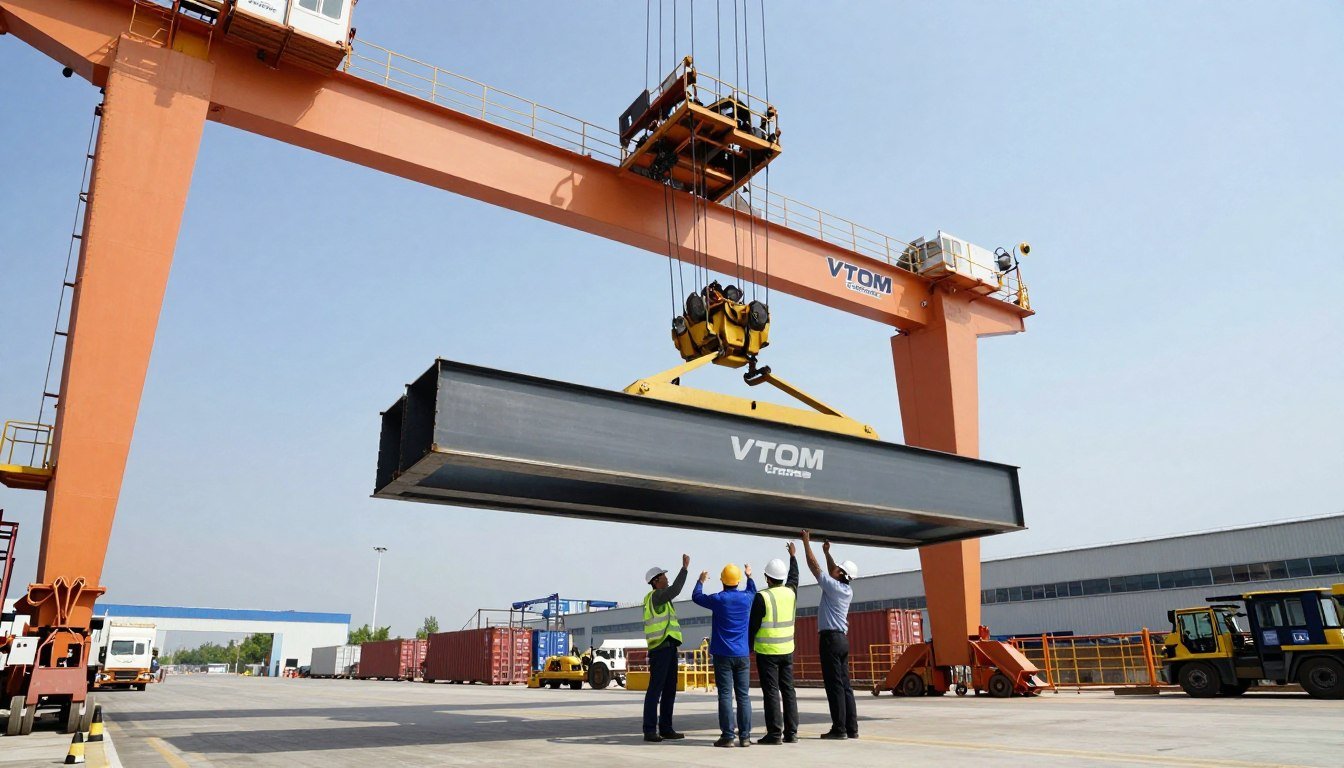
In today’s fast-paced industrial environment, efficient material handling systems are not just helpful—they’re essential. Gantry cranes have emerged as a cornerstone of modern material handling, offering unmatched flexibility, capacity, and cost-efficiency across various sectors.
Gantry cranes are a type of lifting equipment that features a trolley and a hoist to move heavy materials and loads. They are popular due to their high lifting capacity and wide range of sizes, from small workshop setups to massive shipyard configurations.
Gantry Crane Applications in Industries highlight the versatility and importance of these lifting systems, as they provide efficient, precise, and safe solutions for handling heavy loads across a wide range of industrial operations. Gantry cranes are widely used to improve productivity, ensure smooth material movement, and enhance workplace safety in demanding industrial environments.
Key Takeaways
- Gantry cranes offer unmatched flexibility and capacity in material handling operations.
- They are essential equipment in modern industries for lifting and moving heavy loads.
- Gantry cranes provide efficient solutions for handling heavy materials with precision and safety.
- Their versatility makes them a valuable tool across various industrial sectors.
- Advancements in gantry crane technology are shaping the future of industrial material handling.
Understanding Gantry Cranes: A Fundamental Overview
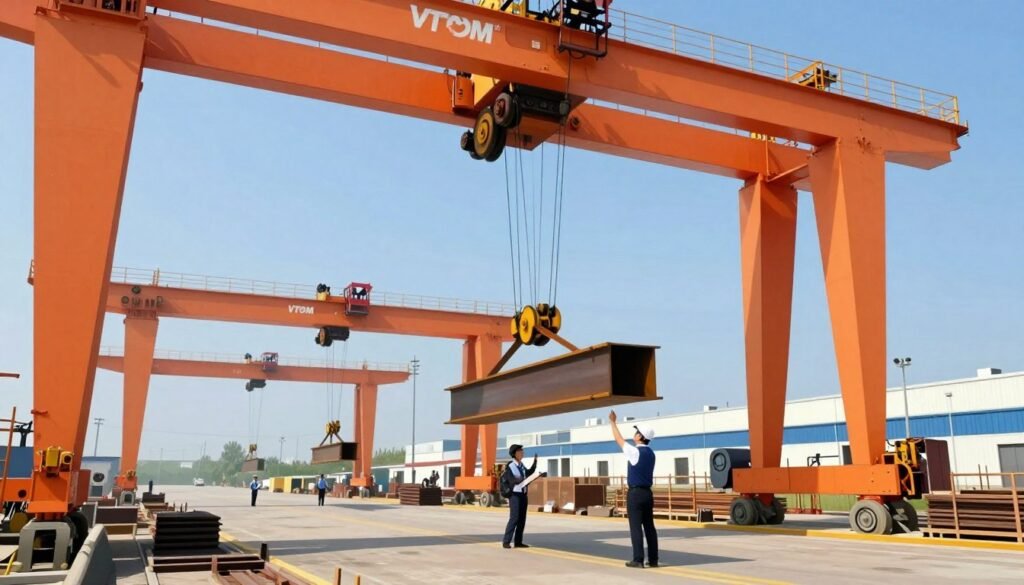
In the realm of heavy lifting, gantry cranes stand out as essential equipment, offering a unique combination of strength and maneuverability. These cranes are pivotal in various industries, facilitating the movement of heavy loads with precision and safety.
What Are Gantry Cranes?
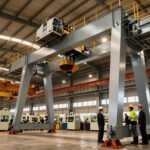
Gantry cranes are characterized by their freestanding structure, often supported by legs that run on rails or wheels, allowing for mobility and flexibility. This design makes them ideal for both indoor and outdoor applications, particularly in environments where overhead cranes are not feasible.
How Gantry Cranes Differ from Overhead Cranes
The primary distinction between gantry cranes and overhead cranes lies in their supporting structure. Gantry cranes use ground-based legs, whereas overhead cranes are mounted on ceiling structure or building columns. Key differences include:
- The supporting structure—gantry cranes rest on the ground, while overhead cranes are attached to building columns or ceilings.
- Gantry cranes offer greater installation flexibility and are ideal for outdoor use or temporary workspaces.
- Mobility is another differentiator, as many gantry cranes can be relocated or reconfigured.
Types of Gantry Cranes for Industrial Applications
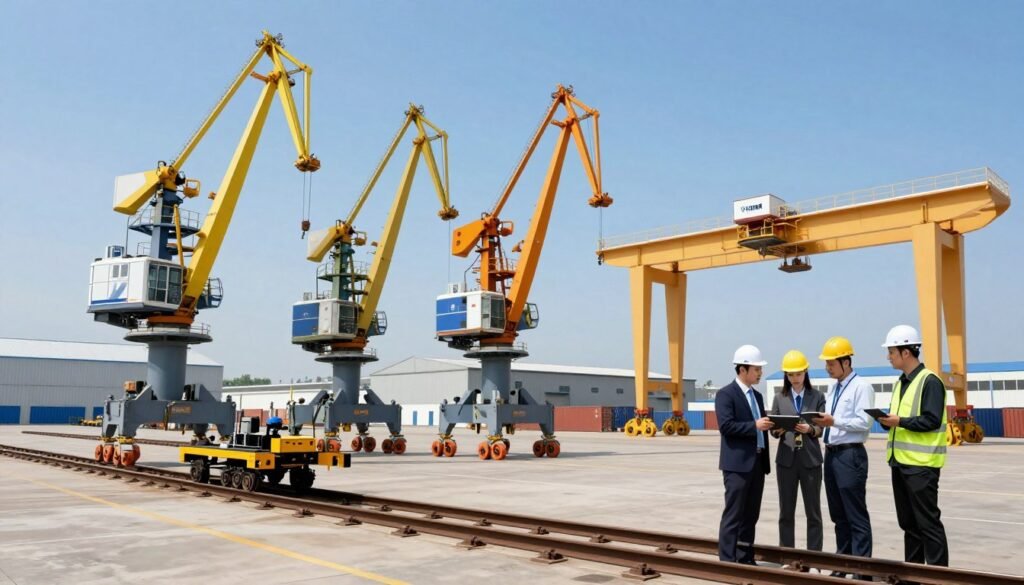
Understanding the different types of gantry cranes is crucial for industries that rely on efficient and safe lifting operations. The variety in gantry crane designs enables businesses to choose the most suitable solutions for their specific operational needs.
Single Girder Gantry Cranes
Single girder gantry cranes are known for their simplicity and cost-effectiveness. They feature a single girder that supports the hoist, making them ideal for lighter loads and smaller workspaces. These cranes are often used in workshops and manufacturing facilities where the lifting capacity requirements are moderate.
Double Girder Gantry Cranes
Double girder gantry cranes offer greater lifting capacity and stability compared to their single girder counterparts. They are designed for heavy-duty applications, supporting higher load capacities and larger spans. These gantry cranes are typically used in industries that require the movement of heavy equipment or materials.
Portable and Semi-Gantry Cranes
Portable gantry cranes are designed with mobility as a primary feature, making them highly adaptable to different work environments. They are ideal for maintenance operations, repair shops, and construction sites where lifting needs change frequently. Semi-gantry cranes, on the other hand, represent a hybrid design that combines the features of overhead and full gantry cranes, offering a cost-effective solution for facilities with limited space or specific support requirements.
The flexibility and mobility of these cranes make them valuable assets in various industrial settings. By selecting the appropriate type of gantry crane, businesses can enhance their operational efficiency and safety.
Key Features and Components of Industrial Gantry Cranes
Modern gantry cranes incorporate sophisticated features that ensure safe and efficient material handling. These features are crucial in industrial settings where gantry cranes play a vital role in day-to-day operations.
Structural Elements and Design Considerations
The structural elements of gantry cranes are designed to withstand heavy loads and harsh environmental conditions. Key design considerations include the span, height, and lifting capacity of the crane. The components used in the construction of gantry cranes, such as girders and legs, are selected based on their strength and durability.
Control Systems and Safety Features
Gantry cranes are equipped with advanced control systems and safety features to ensure smooth and safe operation. Modern gantry crane control systems range from basic pendant controls to sophisticated radio remote controls and fully automated programmable logic controller (PLC) systems that enable precise movement and positioning of loads. Essential safety features include load moment indicators, limit switches, anti-collision systems, and emergency stop functions.
- Variable frequency drives (VFDs) allow for smooth acceleration and deceleration, reducing load swing and enhancing operational safety.
- Warning systems such as audible alarms and motion lights alert personnel to crane movements.
- Advanced gantry cranes incorporate automation features like pre-programmed movement paths and semi-autonomous operation capabilities.
Gantry Crane Applications in Industries: Sector-Wise Analysis
The application of gantry cranes spans various sectors, showcasing their adaptability and operational efficiency. These cranes are pivotal in industries that require heavy lifting and precise material handling.
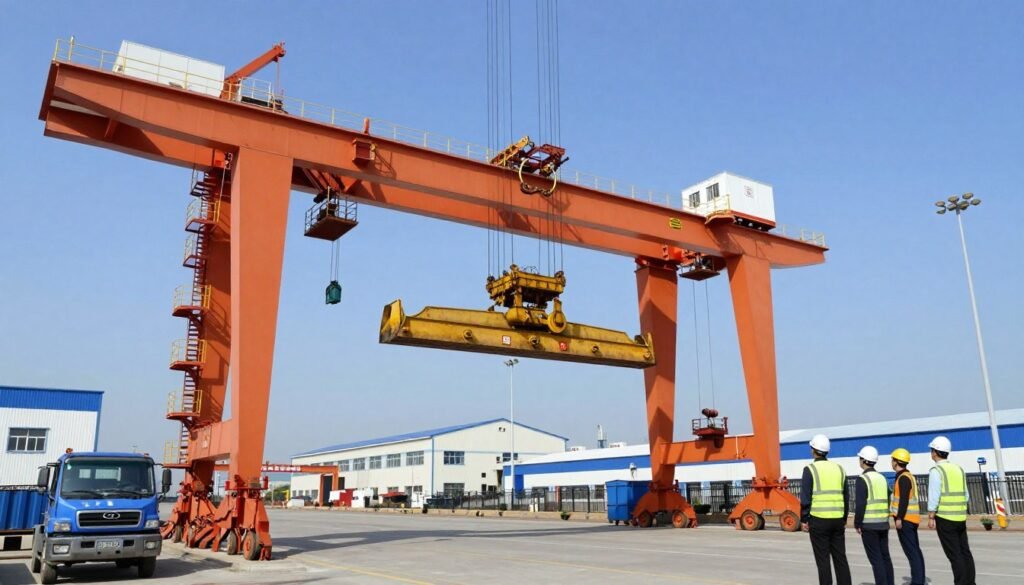
Construction and Heavy Fabrication
In construction and heavy fabrication, gantry cranes are used for handling heavy loads, such as steel beams and large equipment. Their ability to lift and move massive components makes them indispensable on construction sites.
Manufacturing and Assembly Plants
Gantry cranes in manufacturing and assembly plants facilitate the movement of heavy machinery and components, streamlining production processes. They are particularly useful in environments where floor space is limited, and overhead lifting is necessary.
Shipping, Ports, and Container Yards
At shipping ports and container yards, gantry cranes are crucial for loading and unloading cargo from ships and arranging containers in storage yards. Their high capacity and efficiency reduce turnaround times for vessels.
Steel and Metal Fabrication
In steel and metal fabrication, gantry cranes handle raw materials and finished products, supporting the production workflow. They are designed to manage the heavy and often unwieldy materials used in these industries.
Warehousing and Logistics
Modern warehousing and logistics operations utilize gantry cranes to maximize vertical storage space and efficiently handle oversized or non-standard items. These cranes are particularly valuable in distribution centers dealing with bulky products or industrial equipment.
- Warehousing and logistics operations utilize gantry cranes to maximize vertical storage space, efficiently handle oversized or non-standard items, and manage inventory in high-density storage configurations.
- Gantry cranes in logistics applications often feature modular designs that can be expanded or reconfigured as warehouse layouts change.
- The implementation of gantry crane systems can significantly reduce aisle width requirements, potentially increasing storage capacity by 20-30% in the same floor space.
Specialized Applications of Gantry Cranes
The versatility of gantry cranes is evident in their deployment across a range of specialized applications, from shipbuilding to aerospace manufacturing. These cranes are engineered to meet the unique demands of various industries, providing precision and heavy lifting capabilities.
Shipbuilding and Marine Engineering
In shipbuilding and marine engineering, gantry cranes are used for constructing large vessels and handling heavy components. Their ability to lift massive loads with precision makes them indispensable in this sector.
Power Generation and Renewable Energy
The power generation and renewable energy sectors utilize gantry cranes for the installation and maintenance of equipment, such as wind turbines and generators. These cranes facilitate the lifting of heavy components into place, ensuring efficient and safe operations.
Aerospace and Precision Manufacturing
In aerospace manufacturing, gantry cranes are employed for the precise handling of aircraft components, including fuselage sections and wing assemblies. Advanced control systems enable precision positioning and gentle handling, critical for sensitive and valuable aerospace components
Across these specialized industries, gantry cranes demonstrate their value through their adaptability, precision, and capacity for heavy lifting. Their role is crucial in facilitating complex manufacturing and assembly processes.
Key Benefits of Using Gantry Cranes in Industrial Settings
The use of gantry cranes in industrial settings offers several key advantages that enhance operational efficiency and productivity. These benefits are crucial for industries looking to optimize their material handling processes.
Mobility and Space Efficiency
Gantry cranes are highly mobile and can be easily relocated as per the changing needs of the workspace. This mobility, combined with their ability to operate in a variety of environments, makes them ideal for industries where space is limited or where operations are spread over a large area.
Cost-Effectiveness and Lower Installation Requirements
Compared to other types of cranes, gantry cranes require less infrastructure for installation, making them a cost-effective solution. Their design allows for easy setup and relocation, reducing the need for complex and expensive installation processes.
Versatility and Adaptability
Gantry cranes are versatile and can be adapted to various industrial applications, including heavy fabrication, manufacturing, and warehousing. Their ability to handle different types of loads and operate in diverse environments makes them a valuable asset for industries with varied material handling needs.
Enhanced Safety and Load Control
Safety is a critical concern in material handling operations, and gantry cranes offer high levels of operational safety through advanced controls and stable lifting mechanisms. Modern gantry cranes come equipped with features like anti-collision devices and overload protection systems, ensuring safe and controlled load handling. This not only safeguards the workforce but also protects valuable inventory and infrastructure.
Selecting the Right Gantry Crane for Your Industrial Needs
Choosing the appropriate gantry crane is crucial for optimizing industrial operations. The right gantry crane can significantly enhance productivity and safety in various industrial settings.
Load Capacity and Span Requirements
Understanding the load capacity and span requirements is vital when selecting a gantry crane. Industrial facilities must assess the maximum weight they need to lift and the span required to cover their workspace effectively.
Environmental Considerations
Gantry cranes are often used in diverse environments, from indoor manufacturing plants to outdoor construction sites. Environmental factors such as weather conditions, temperature variations, and exposure to corrosive elements must be considered to ensure the crane’s durability and performance.
Budget and Long-Term ROI
Budget considerations for cranes extend beyond the initial purchase price. A comprehensive analysis should include installation costs, maintenance, and potential operational disruptions. Evaluating the long-term return on investment (ROI) is crucial to justify the capital expenditure for gantry cranes that meet specific industrial needs and provide effective solutions.
By carefully assessing these factors, industries can select gantry cranes that not only meet their immediate requirements but also provide long-term value and efficiency.
Future Trends in Gantry Crane Technology
Gantry crane technology is evolving rapidly, driven by the need for more efficient and environmentally friendly solutions. Industries are increasingly adopting advanced gantry crane systems that incorporate automation, smart controls, and sustainable practices.
Automation and Smart Controls
The integration of automation and smart controls in gantry cranes is enhancing operational efficiency and safety. Modern gantry cranes are equipped with advanced control systems that enable precise load handling, reduced manual intervention, and improved productivity.
Sustainability and Energy Efficiency
Sustainability is becoming a key focus in gantry crane technology, with a shift towards energy-efficient designs and eco-friendly operations. Electric-powered gantry cranes, regenerative braking systems, and smart energy management are some of the innovations driving this trend.
| Feature | Benefit | Impact |
|---|---|---|
| Regenerative Braking | Energy Recovery | Reduced Power Consumption |
| Electric Power | Zero Emissions | Lower Environmental Impact |
| Smart Energy Management | Optimized Motor Usage | Increased Efficiency |
Conclusion
As industries continue to evolve, the role of gantry cranes in enhancing productivity and safety is becoming increasingly significant.
These versatile machines have established themselves as indispensable lifting solutions across diverse industries. With their unique combination of flexibility, capacity, and cost-efficiency, gantry cranes are redefining material handling.
The ongoing advancements in gantry crane technology ensure they remain at the forefront of industrial solutions. As global industries emphasize efficiency and sustainability, the importance of cranes like gantry cranes will only continue to grow.
About OM Cranes – Gantry Crane Applications in Industries
OM Cranes (VTOM Cranes) is a leading industrial crane manufacturer and lifting solutions provider based in Chikhali, Pune, offering high-quality gantry crane systems tailored to a wide range of industrial applications. Gantry cranes are versatile material-handling machines widely used in manufacturing plants, warehouses, construction sites, shipping yards, and heavy machinery maintenance due to their ability to lift and transport heavy loads efficiently across large floor areas. With extensive experience in crane engineering, fabrication, installation, and after-sales support, OM Cranes delivers customized gantry solutions that enhance productivity, safety, and workflow efficiency. The company serves clients across Pune, Pimpri-Chinchwad (PCMC), Bhosari, Chakan, Talegaon, Moshi, Alandi, and nearby industrial zones, ensuring reliable performance and superior material handling for diverse industrial needs.
 Previous Post