

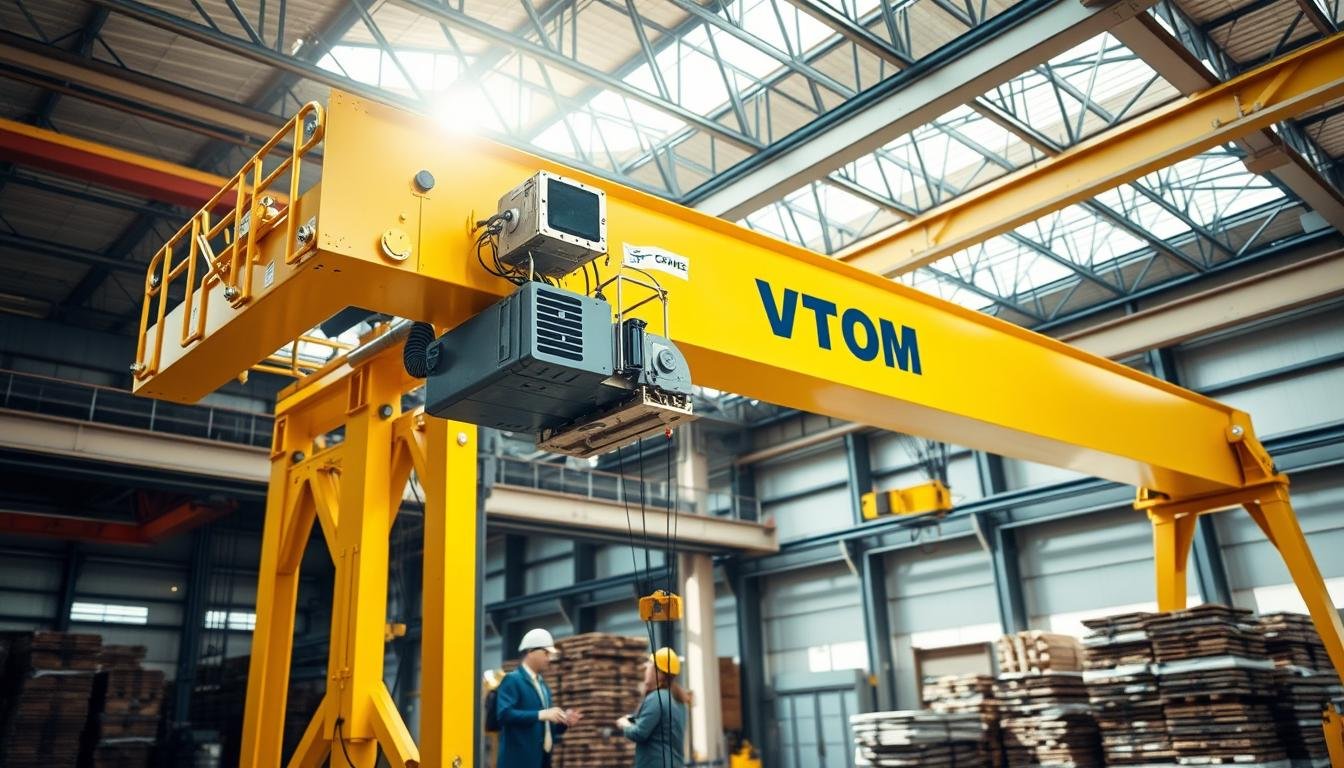
Material handling is a critical aspect of industrial operations, and overhead cranes play a vital role in this process. These sophisticated lifting systems are designed to provide efficient and safe movement of heavy loads across manufacturing, construction, and logistics sectors.
In Pune and across India, selecting the right crane is crucial for optimizing operational efficiency, workplace safety, and long-term cost-effectiveness. Modern crane systems incorporate advanced features, including variable frequency drives and anti-sway technology, to enhance precision and safety.
Key Takeaways
- Overhead cranes are essential for efficient material handling in industrial environments.
- Advanced features in modern cranes enhance precision and safety.
- Selecting the right crane is crucial for operational efficiency and cost-effectiveness.
- Overhead cranes are used across various industries, including manufacturing and construction.
- Proper crane systems can minimize downtime and maximize productivity.
Understanding Overhead Cranes
Overhead cranes are a crucial component in modern industrial settings, facilitating the efficient movement of heavy loads. These cranes are designed to lift and transport materials across various facilities, enhancing productivity and reducing manual labor.
What Are Overhead Cranes?
Overhead cranes, also known as EOT (Electric Overhead Traveling) cranes, are material handling equipment used in industries for lifting and moving heavy loads. They consist of a bridge, hoist, and trolley, which work together to provide a smooth and efficient operation.
History and Evolution
The evolution of overhead cranes dates back to the late 19th century. The first electric overhead crane was designed by Sampson Moore in England in 1876. Since then, significant advancements have been made, including the introduction of electric motors and standardized designs, which have improved efficiency, safety, and lifting capacity.
| Year | Event | Impact |
|---|---|---|
| 1876 | First electric overhead crane designed by Sampson Moore | Revolutionized material handling |
| 1887 | Ludwig Stuckenholz introduced electrical components | Determined industry design standards |
| 1910 | First mass-produced electric motor hoist in Germany | Improved efficiency and safety |
The development of overhead cranes has been marked by significant milestones, including the transition from steam to electric power and the incorporation of advanced technologies such as variable frequency drives and automation features.
Types of Overhead Cranes
The diversity in overhead crane designs reflects the complexity of industrial operations. Overhead cranes are essential for lifting and moving heavy loads in various industries, and their types vary based on design, functionality, and application.
Single Girder EOT Cranes
Single girder EOT cranes are ideal for light to medium-duty applications, offering capacities up to 20 tons. They are cost-effective and suitable for industries with limited space.
Double Girder EOT Cranes
Double girder EOT cranes are designed for heavy-duty applications, providing higher lifting capacities and stability. They are suitable for industries requiring high-capacity lifting.
Gantry Cranes
Gantry cranes are versatile and can be used in various settings, including outdoor applications. They offer flexibility in terms of span and capacity, making them suitable for different industrial needs.
Semi-Gantry Cranes
Semi-gantry cranes represent an innovative hybrid design, offering capacities from 5 tons to 70 tons and a span of up to 30 meters. Their anti-jump arrangement and stool-up design enhance safety and optimize height.
- Semi-gantry cranes optimize space utilization by supporting one end on a runway mounted on a building column or wall and the other end on a floor-level rail.
- They are ideal for facilities with limited structural support or where one side needs to remain open for material flow.
- With lifting capacities ranging from 5 to 70 tons and spans up to 30 meters, they deliver robust performance while requiring less floor space than conventional gantry systems.
Advanced Crane Systems
Advanced crane systems are revolutionizing industrial operations in India with their cutting-edge technology. These systems are designed to provide efficient and precise material handling solutions, catering to the diverse needs of various industries.
Jib Cranes
Jib cranes are versatile lifting solutions used in various industrial settings. They offer a compact design, making them ideal for facilities with limited space. Jib cranes are known for their ease of operation and ability to handle loads with precision.
Underslung EOT Cranes
Underslung EOT cranes are designed to run along the underside of a crane beam, maximizing floor space. They are suitable for applications where heavy loads need to be lifted and moved across the facility. These cranes are known for their durability and reliability.
LR+ (Light Rail Crane) Systems
The premium overhead crane LR+ System redefines industrial applications with its advanced technology. It features specialized aluminum profiles that maximize suspension distances while minimizing weight, making it ideal for facilities where structural loading is a concern. The unique ball and socket arrangement facilitates controlled pendulation, reducing horizontal forces and stress on support structures.
Key benefits of LR+ systems include exceptional ergonomics with smooth, low-effort movement and precise positioning capabilities, reducing operator fatigue and improving handling efficiency for repetitive tasks. These advanced crane systems are suitable for clean manufacturing environments, assembly lines, and precision manufacturing.
Technical Specifications of Overhead Cranes
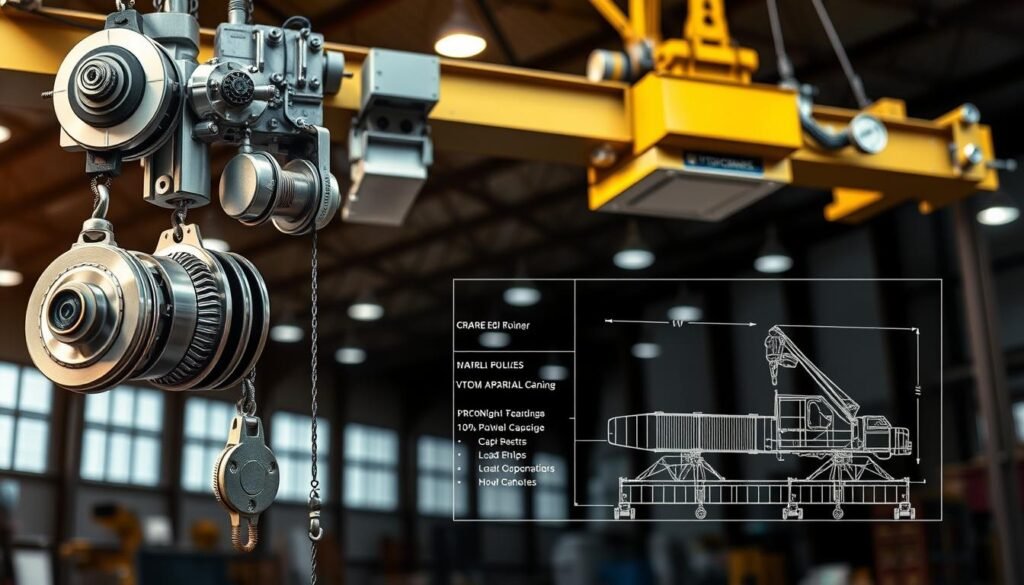
Understanding the technical specifications of overhead cranes is essential for selecting the right equipment for industrial operations. These specifications determine the crane’s capability, efficiency, and suitability for various applications.
Lifting Capacity Range
Overhead cranes are available in a wide range of lifting capacities, from a few tons to several hundred tons. The lifting capacity is a critical factor in determining the crane’s ability to handle heavy loads safely and efficiently.
Span and Height Specifications
The span and height specifications of an overhead crane are crucial in defining its operational envelope. The span refers to the distance between the crane’s runway rails, while the height is determined by the hook’s maximum lift and the crane’s structural limitations.
Travel Speed and Control Systems
Overhead cranes feature various travel speeds optimized for different movement functions. Hoisting speeds typically range from 1-5 m/min for precise load control, while cross travel (trolley) speeds range from 10-25 m/min and long travel (bridge) speeds from 10-40 m/min.
| Movement Function | Speed Range (m/min) |
|---|---|
| Hoisting Speed | 1-5 |
| Cross Travel (Trolley) Speed | 10-25 |
| Long Travel (Bridge) Speed | 10-40 |
Modern overhead cranes incorporate advanced control systems, including variable frequency drives (VFDs) and radio remote controls, to enhance operational safety and efficiency. These systems provide smooth acceleration and deceleration, reducing load swing and structural stress.
Applications of Overhead Cranes
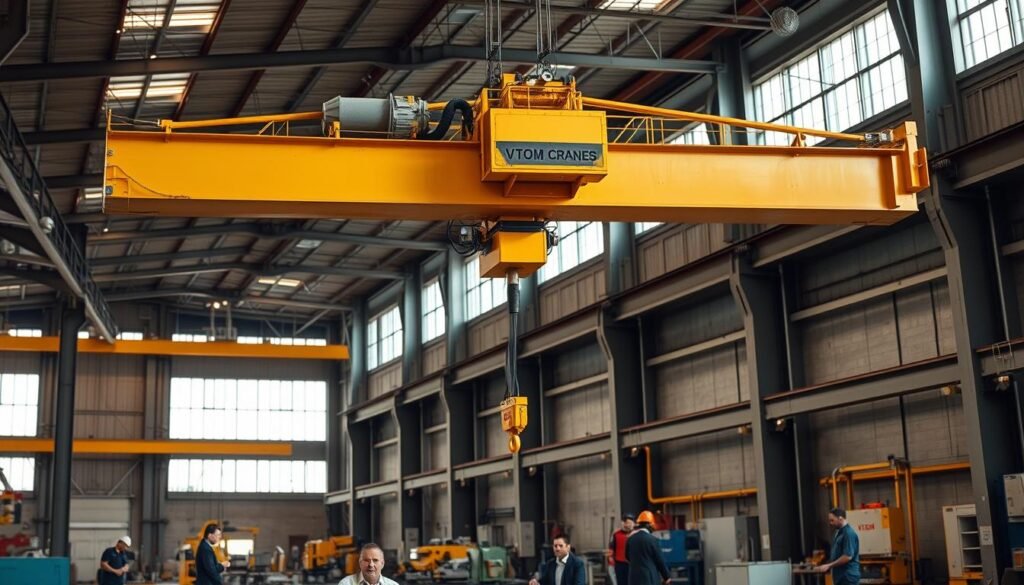
The versatility of overhead cranes makes them essential in multiple sectors, from production facilities to heavy-duty construction sites. They are designed to handle heavy materials and equipment, making them a crucial component in various industries.
Manufacturing and Production
In manufacturing and production facilities, overhead cranes are used to handle raw materials and equipment. For instance, the automobile industry relies on overhead cranes to manage raw materials and components during production.
Construction and Heavy Industries
Overhead cranes are extensively used in construction and heavy industries for handling heavy building materials and equipment. They play a vital role in construction material production facilities, handling precast concrete elements and structural steel components.
Heavy industries such as mining equipment manufacturing and power generation rely on high-capacity overhead cranes to move massive assemblies with precision. The steel industry also represents a significant application area for overhead cranes, where specialized hot metal cranes handle molten metal at extremely high temperatures.
Industry-Specific Overhead Crane Solutions
Industry-specific overhead crane solutions are crucial for efficient material handling. Different industries have unique requirements that necessitate customized crane systems to ensure safe and productive operations
Metal and Steel Industry
The metal and steel industry requires robust overhead cranes that can handle heavy loads and withstand harsh environments. These cranes are designed for applications such as steel production, metal fabrication, and scrap handling.
Automotive Sector
In the automotive sector, overhead cranes are used for assembly, production, and maintenance tasks. They are designed to handle heavy engine blocks, vehicle bodies, and other components, ensuring efficient production processes.
Pharmaceutical and Food Processing
Gantry and semi-gantry cranes are used in pharmaceuticals, food, and beverages to ensure safe and efficient material handling. These industries require specialized features such as stainless steel components, washdown capabilities, and clean room compatibility.
The pharmaceutical and food processing industries require specialized overhead crane solutions that meet stringent hygiene and contamination control standards while providing efficient material handling. Clean room compatible overhead cranes feature stainless steel components, enclosed cable systems, and special coatings that prevent particle generation and facilitate regular sanitization procedures.
These specialized cranes often incorporate food-grade lubricants, sealed bearings, and smooth surface finishes that prevent product contamination and comply with FDA and other regulatory requirements. In pharmaceutical manufacturing, overhead cranes facilitate the movement of mixing vessels, reactor tanks, and packaging equipment during production setup and maintenance operations. Food processing facilities utilize overhead cranes for handling bulk ingredients, moving processing equipment during changeovers, and managing packaging materials, with designs that withstand frequent washdown procedures and harsh cleaning chemicals.
Benefits of Using Overhead Cranes
Overhead cranes play a vital role in enhancing productivity and reducing costs in industrial settings. They offer a range of benefits that improve operational efficiency, optimize space, and ensure safety.
Operational Efficiency
Overhead cranes significantly enhance operational efficiency by streamlining load handling processes. With the ability to lift and move heavy loads with precision, these cranes reduce the time and labor required for material handling, thus increasing overall productivity.
Space Optimization
Overhead cranes are designed to utilize vertical space, thereby optimizing floor space for other operations. This is particularly beneficial in facilities where space is limited, allowing for a more efficient use of available area without compromising on lifting capacity.
Safety Features
Modern overhead cranes incorporate advanced safety features, including overload protection, emergency stop functions, and anti-collision technology. These features help prevent accidents, protect equipment, and ensure operator safety during lifting operations.
| Benefit | Description | Impact |
|---|---|---|
| Operational Efficiency | Streamlines load handling, reduces labor | Increased productivity |
| Space Optimization | Utilizes vertical space, frees floor area | Better facility utilization |
| Safety Features | Prevents accidents, protects equipment | Enhanced operator safety |
Overhead Crane Price Factors in India
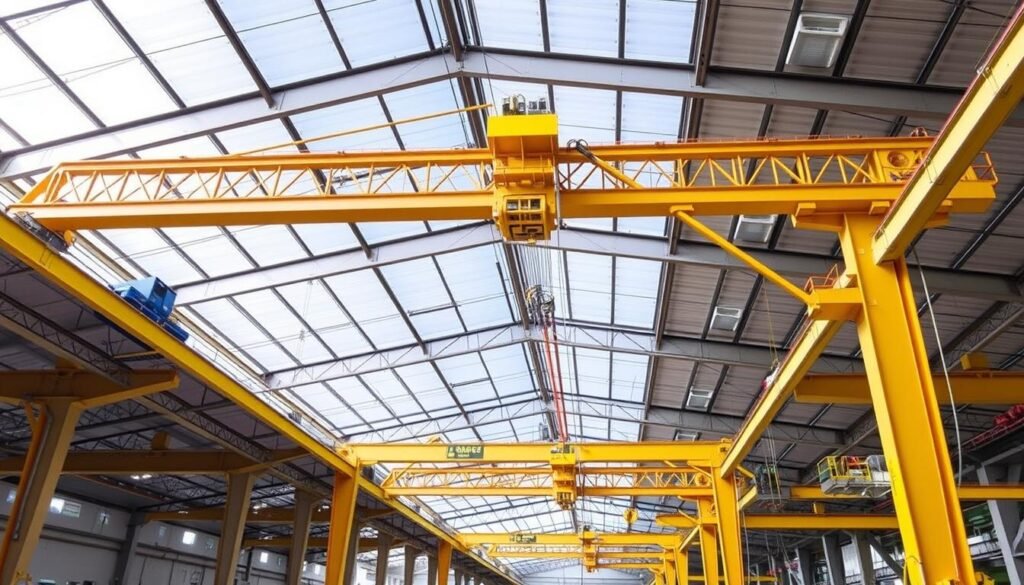
Understanding the factors that affect overhead crane prices is crucial for businesses in India. The cost of an overhead crane is determined by several key elements.
Price Range for Different Models
The price range for overhead cranes in India varies significantly based on the model and specifications. Basic models with standard configurations are more economical, while advanced models with higher capacities and custom features command premium prices.
Factors Affecting Cost
Several factors affect the cost of overhead cranes, including lifting capacity, span length, height of lift, control system complexity, safety features, and customization requirements. Higher capacity cranes with advanced features and customizations are more expensive.
Top Overhead Crane Manufacturers in Pune
The city of Pune hosts a number of top-tier overhead crane manufacturers known for their commitment to quality. These manufacturers are recognized for producing high-quality cranes that meet international standards.
Leading Brands and Their Specializations
Reputable manufacturers in Pune specialize in various types of overhead cranes, including single girder, double girder, and gantry cranes. They cater to diverse industries such as manufacturing, construction, and heavy industries.
Quality Standards and Certifications
Top manufacturers adhere to stringent quality standards, including ISO 9001 for quality management and ISO 14001 for environmental management. They also comply with industry-specific safety certifications and Indian standards such as IS 807 and IS 3177.
Some key quality measures include third-party certification and testing, in-house quality control laboratories, and comprehensive documentation to ensure product quality and safety.
How to Select the Right Overhead Crane
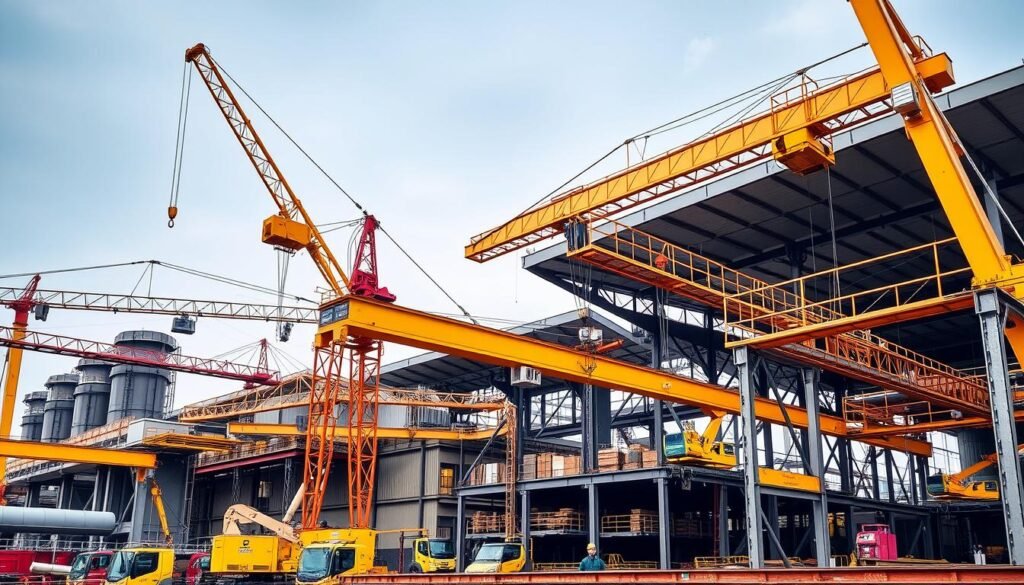
Selecting an appropriate overhead crane requires careful consideration of several factors. To make an informed decision, it’s essential to assess your specific requirements, evaluate technical specifications, and consider environmental factors.
Assessing Your Requirements
Begin by determining the crane’s intended usage, including the type of loads to be lifted, frequency of use, and required lifting capacity. This assessment will help you identify the most suitable crane type and configuration for your operations.
Evaluating Technical Specifications
Next, evaluate the technical specifications of the crane, including its lifting capacity, span, and height. Ensure that these specifications align with your operational needs and facility constraints.
Considering Environmental Factors
Environmental factors significantly impact overhead crane selection. Consider ambient temperature ranges, presence of dust or corrosive chemicals, and outdoor vs. indoor operation. Specialized environments, such as clean rooms or hazardous areas, may require explosion-proof or intrinsically safe crane systems.
- Ambient temperature ranges require special consideration for lubricants, electrical components, and material specifications.
- The presence of dust, corrosive chemicals, or saltwater exposure necessitates specialized protection measures.
- Outdoor installations demand weather-resistant features, including galvanized or stainless steel components.
Customization Options for Overhead Cranes
The versatility of overhead cranes is significantly enhanced through customization options, allowing businesses to tailor their material handling equipment to specific operational needs.
Tailored Design Solutions
Tailored design solutions for overhead cranes involve customizing the crane’s configuration, capacity, and features to suit the application. This includes designing cranes with specific lifting capacities and span lengths to fit unique workspace requirements.
Special Features and Add-ons
Special features and add-ons can significantly enhance the functionality and safety of overhead cranes. These include anti-sway technology, load monitoring systems, collision avoidance, and specialized attachments like magnets and grabs. Such features improve operational efficiency and safety.
Installation and Setup Process
The installation and setup process is a critical phase in the deployment of overhead cranes. It involves several crucial steps that ensure the crane operates safely and efficiently.
Site Preparation Requirements
Site preparation is a vital precursor to overhead crane installation. It requires precise alignment and leveling to ensure smooth crane operation.
Professional Installation Services
Professional installation services provided by reputable manufacturers include comprehensive project management, crane assembly, electrical connections, load testing, and operator training.
Key aspects of professional installation include runway system installation, crane assembly according to manufacturer specifications, and thorough load testing at 125% of rated capacity.
Maintenance and Service Requirements
The reliability of overhead cranes depends on rigorous maintenance schedules and quality service support. Regular maintenance is essential to ensure the crane operates safely and efficiently.
Routine Maintenance Schedules
Routine maintenance schedules for overhead cranes typically include regular inspections, lubrication of moving parts, and checks on critical components such as brakes and hoists. Bajaj Indef provides comprehensive service support, including on-site and on-call assistance, to ensure minimal downtime.
Service Contracts and Support
Service contracts offered by leading manufacturers like Bajaj Indef range from basic inspection packages to comprehensive maintenance agreements. These contracts cover routine service, parts replacement, and emergency repairs, ensuring that the crane remains operational with minimal disruption.
Annual maintenance contracts (AMCs) include scheduled preventive maintenance visits, safety inspections, and detailed reporting. Emergency support services with guaranteed response times are also available, providing 24/7 hotline support and rapid deployment of service technicians.
Safety Standards and Compliance
Compliance with safety standards is paramount for the safe operation of overhead cranes in various industries. Ensuring that cranes meet these standards is crucial for preventing accidents and maintaining operational efficiency.
Indian Safety Regulations
Indian safety regulations for overhead cranes are designed to ensure safe operation and maintenance. These regulations are often aligned with international standards to facilitate global trade and compliance.
International Standards and Certifications
International standards such as FEM 1.001, ISO 4301-5, and ASME B30.2 play a significant role in governing the design, manufacture, and operation of overhead cranes. Manufacturers like Bajaj Indef adhere to these standards to ensure their products meet global quality and safety expectations. Key aspects include classification systems, design principles, and safety guidelines that facilitate global market access and compliance.
Future Trends in Overhead Crane Technology
Emerging trends in overhead crane technology include enhanced automation, improved energy efficiency, and advanced safety features. The industry is witnessing a significant shift towards more sophisticated and connected crane systems.
Key trends include:
- Increased automation with semi-autonomous and fully autonomous systems that improve efficiency and reduce labor costs.
- Industry 4.0 integration, transforming cranes into connected devices that optimize material flow.
- Remote monitoring technologies enabling predictive maintenance and reducing downtime.
- Energy efficiency innovations, including regenerative braking systems and optimized motion control.
- Advanced safety technologies, such as AI-based collision prediction and worker proximity detection.
These advancements are revolutionizing the overhead crane industry, enabling businesses to operate more efficiently and safely.
Contact VTOM Cranes :
At OM Cranes (VTOM Cranes), we specialize in designing, manufacturing, and installing high-performance overhead cranes for industries that require safe, reliable, and efficient material-handling solutions. Based in Chikhali, Pune, our engineering-driven team delivers customized single-girder and double-girder overhead crane systems built to meet diverse operational needs across manufacturing units, warehouses, fabrication plants, and heavy-engineering facilities. With a strong commitment to quality, durability, and on-site technical support, we proudly serve clients across Pune, Pimpri Chinchwad (PCMC), Bhosari, Chakan, Talegaon, Moshi, Alandi, and nearby industrial zones — ensuring smooth crane operations backed by expert installation, maintenance, and after-sales service.
Conclusion
Overhead cranes play a vital role in enhancing operational efficiency in various industrial settings. The diverse range of overhead crane options available in India ensures that there’s a suitable solution for every material handling requirement.
By assessing specific needs, understanding available options, and partnering with experienced suppliers, industries can implement an overhead crane solution that boosts productivity and safety while adapting to future operational changes. This strategic investment in lifting and material handling technology is crucial for long-term success.
FAQ
1. What are Overhead Cranes used for in industries?
Overhead Cranes are used for lifting and moving heavy materials in factories, warehouses, and manufacturing units. They improve safety and efficiency in industrial operations.
2. Where can I get Overhead Cranes in Pune, Chikhali, and Pimpri Chinchwad?
OM Cranes provides reliable Overhead Crane solutions in Pune, Chikhali, and Pimpri Chinchwad with customised crane systems for different industrial requirements.
3. Which types of Overhead Cranes are available?
Overhead Cranes include Single Girder EOT Cranes, Double Girder EOT Cranes, Gantry Cranes, and customised material handling cranes.
4. Why choose Overhead Cranes for manufacturing industries?
Overhead Cranes help reduce manual handling, improve workplace safety, increase productivity, and efficiently handle heavy loads.
5. How do I select the right Overhead Crane for my industry in Pune?
The right crane depends on load capacity, workspace, lifting height, and application. OM Cranes provides expert guidance for industries in Pune, Chikhali, and Pimpri Chinchwad